
Use of Leapfrog's RBF Numerical Model in Deposits with Low Drillhole Density
Asturmine successfully applies radial basis functions (RBF) in industrial mining to generate continuous, coherent, and defensible estimations without relying on dense grids or unstable variograms.
Robust estimation in non-metallic mineral deposits with wide drillhole spacing
Continuous implicit modeling using RBF without the need to build explicit variograms
Elimination of geometric artifacts and sharp transitions typical of IDW and NN
Agile and transparent validation through agreement of global statistics
1. Context
In industrial mining, particularly in non-metallic mineral deposits such as special clays or magnesites, drilling campaigns are typically characterized by a low data density. It is common to find setups where drillholes are executed from the surface at 90 degrees, with spacings of hundreds of meters between them. These distances are due to economic and operational criteria, since these materials, unlike precious or strategic metals, have a low unit value and do not justify intensive drilling campaigns except in very advanced stages of the project.
In this context, traditional estimation methods —such as Inverse Distance Weighting (IDW), Natural Neighbour (NN), or even Ordinary Kriging (OK)— present significant limitations. To be robust, these methods require a relatively homogeneous distribution of data, and they suffer greatly when data is scarce and widely spaced.
2. Problem
The main challenge in deposits of this type is the scarcity of direct spatial information. With vertical drillholes spaced hundreds of meters apart, classical interpolation techniques yield unreliable results for several reasons:
- IDW and NN generate flat areas or sharp changes between data points without realistically smoothing transitions, as they rely exclusively on geometry without considering geological continuity.
- Ordinary Kriging (OK) requires a well-defined variographic structure, which is not viable with such a low data density. In fact, variogram results in these cases tend to be unstable or lack geological meaning.
- Geostatistical validation becomes complex and poorly representative when there are not enough data pairs to establish robust spatial structures.
3. Solution
The RBF (Radial Basis Function) model offered by Leapfrog represents a robust, coherent, and practical alternative in these cases. This technique does not require the explicit construction of variograms, but it still introduces an implicit form of spatial continuity through the use of radial basis functions, which automatically adjust to the available data. In other words, it applies a degree of smoothing and continuity equivalent to basic geostatistics, without the limitations imposed by other methods.
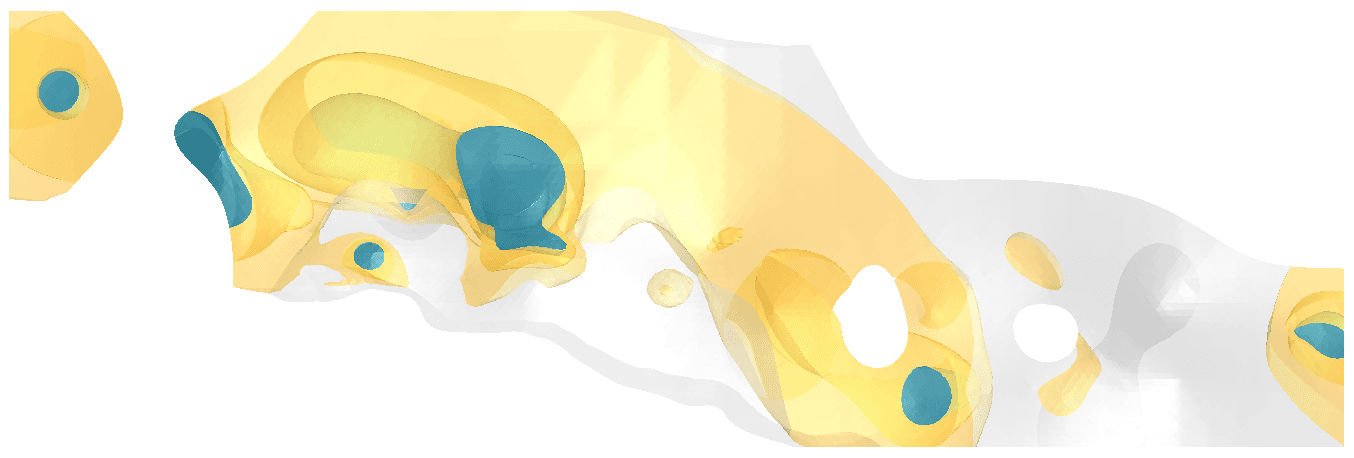
Fig 1: Example of an RBF model based on the qualities of an industrial mineral
Key advantages of the RBF model in industrial mineral mining with low data density:
- It does not need a dense drillhole grid to perform well, making it perfectly suited for vertical configurations with wide spacing.
- It models continuous surfaces that respect data values and generate smooth transitions, without the need to force the calculation of variographic structures.
- It reduces the appearance of 'geometric artifacts' typical of simple interpolations, such as square edges or extensive flat areas.
- It respects the underlying geological geometry, especially if integrated with lithological surfaces previously modeled in Leapfrog.
At Asturmine, the method for validating estimations performed with RBF is simple but effective: basic statistics of the input data (drillholes) are compared with those of the block model. The minimum, first quartile (Q1), median (Q2), third quartile (Q3), maximum, and mean are analyzed, and if these values are in good agreement between data and blocks, the model is considered robust.
This approach is transparent, intuitive, and allows for rapid validation of whether the model has respected the distribution of grades or qualities. Furthermore, it enables quick identification of biases or distortions that could stem from poor parameterization or complex geometry not captured by the model.
4. Conclusions
The use of the RBF model in Leapfrog represents an optimal and modern solution for resource estimation in industrial mineral deposits with low drilling density. In environments where classical methods fail due to a lack of data or variographic complexity, RBF maximizes the available information by generating smooth, continuous models that are coherent with the deposit's geology.
For companies like Asturmine, this model has proven to be not only technically sound, but also pragmatic and efficient, facilitating decision-making, the planning of new campaigns, and the preparation of resource reports with a credible technical foundation.
In industrial mineral deposits such as special clays or magnesites, where margins are tight and drilling campaigns are heavily constrained, the RBF model is not only a viable option, but probably the best tool available today to generate useful, defensible resource models that are coherent with geological reality.